Why Social Media Platforms Want Your Email and How to Protect It
Social media has become a major part of everyday life. Millions of people use platforms to connect with friends, share content, follow businesses, watch videos, and communicate with people around the world. Creating an account usually takes only a few minutes, but there is one piece of information almost every social media platform wants from you: your email address.
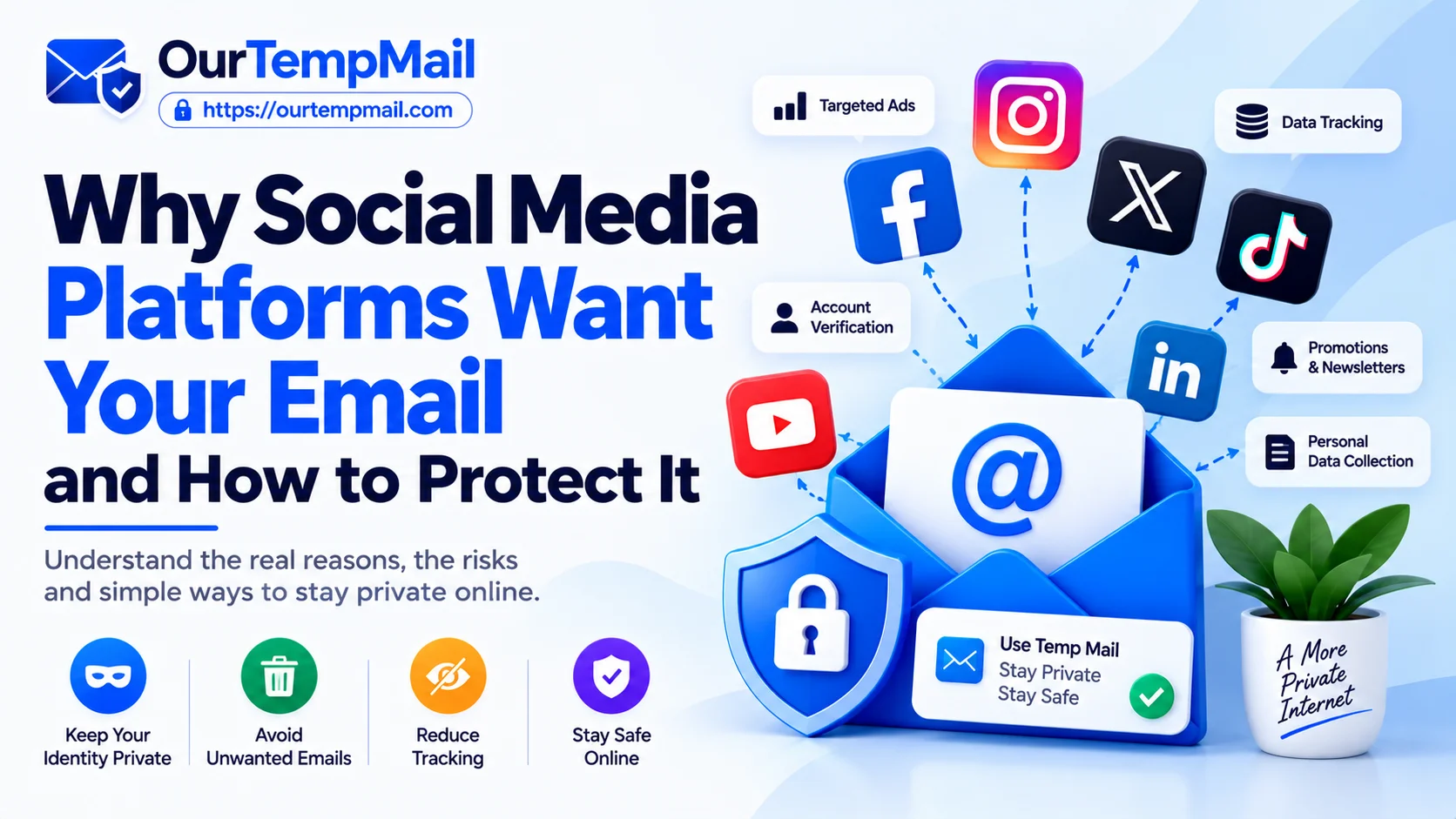
You may have wondered why a social media platform needs your email when you are simply trying to create an account. The answer is more complex than account registration. Your email can be used for account verification, security notifications, password recovery, marketing, advertising, and connecting your identity across different online services.
While providing your primary email address can sometimes be convenient, it can also expose you to spam, unwanted marketing messages, data tracking, and privacy risks. This is why understanding how platforms use your email and knowing how to protect it is increasingly important.
In this guide, we explain why social media platforms ask for your email address and how you can protect your privacy when signing up for online services.
Why Do Social Media Platforms Ask for Your Email?
The most obvious reason is account creation. Your email address acts as a unique identifier that helps the platform recognize your account.
However, email addresses serve several additional purposes.
1. Account Verification
When you create a new social media account, the platform often sends a verification message to your email address. You must click a link or enter a verification code to prove that you have access to the email account.
This process helps platforms reduce fake accounts, automated registrations, and some types of spam.
However, not every website requires you to provide your permanent personal email address. For websites where you only need temporary access, using a temporary email address can help you complete registration while keeping your primary inbox private.
2. Password Recovery
Social media platforms also use your email for password recovery.
If you forget your password, the platform may send a reset link or security code to your registered email address. This makes email an important part of account security.
For important accounts that you plan to use long term, your primary secure email may be the best choice. However, for temporary accounts, testing platforms, one-time registrations, or services you may never use again, exposing your main email address may not always be necessary.
The key is to choose the right email for the importance of the account.
3. Security Notifications
Platforms frequently send emails when something unusual happens with your account.
For example, you may receive notifications when:
- Someone logs in from a new device.
- Your password is changed.
- Your account information is updated.
- A suspicious login attempt is detected.
- Two-factor authentication settings are modified.
These security alerts can be useful because they allow you to react quickly if someone attempts to access your account.
Your Email Helps Platforms Connect Your Digital Identity
An email address is more than just a way to receive messages.
For many online platforms, it can become an identifier connected to your online activity. If you use the same email address across multiple websites and services, those accounts may become easier to associate with the same person.
For example, you might use one email address for:
- Social media platforms
- Online shopping
- Mobile applications
- Newsletters
- Forums
- Gaming websites
- Free trials
- Online tools
Over time, that email address can become connected with a large amount of online activity.
Using separate email addresses for different purposes can help create better privacy boundaries. A primary email can be reserved for important services, while disposable addresses can be used for websites that only require temporary communication.
A free temp mail service can be particularly useful when you do not want to expose your permanent email address to every website you visit.
Why Platforms Use Email for Marketing
One of the biggest reasons companies want access to your email address is communication.
After registration, platforms may send you messages about:
- New features
- Product updates
- Recommended content
- Friend suggestions
- Promotional campaigns
- Special offers
- Security updates
- Account activity
Some of these emails are useful. Others can quickly become unnecessary.
Even when you unsubscribe from marketing emails, your email address may remain associated with your account.
This does not mean that every platform is doing something wrong. Businesses legitimately need ways to communicate with their users. However, users should have control over which services can access their primary email address.
Before signing up, it is worth asking yourself a simple question:
Do I actually need to give this website my permanent email address?
If the answer is no, using a disposable email address may provide an additional layer of privacy.
The Risk of Using Your Main Email Everywhere
Using the same personal email address for every online registration can create several problems.
More Spam
The more websites that have your email address, the greater the chance of receiving unwanted emails.
Some websites may send frequent promotional messages. Others may share information with marketing partners depending on their privacy policies and your settings.
Eventually, your inbox can become filled with messages you never wanted.
Increased Exposure After Data Breaches
Data breaches happen when unauthorized parties gain access to information stored by a company or service.
If a website experiences a security incident, information associated with your account could potentially be exposed.
Using a separate email address for low-priority registrations can help reduce the number of services connected directly to your primary inbox.
Easier Online Tracking
Using one email address across many platforms can make it easier to connect different parts of your online activity.
For users who value privacy, separating online identities can be a useful strategy.
For example, you might maintain:
- A primary email for banking and important accounts.
- A work email for professional communication.
- A separate email for subscriptions.
- A temporary email for one-time registrations.
This approach can reduce unnecessary exposure of your most important email address.
How to Protect Your Email When Using Social Media
Protecting your email does not mean avoiding social media completely. Instead, it means making smarter decisions about where and when you share it.
1. Use Your Primary Email Only for Important Accounts
Your main email address should ideally be reserved for services that are important to you.
These may include:
- Financial accounts
- Professional accounts
- Long-term social media accounts
- Government services
- Important subscriptions
Avoid using your primary email for every free tool, download, giveaway, or website that asks for registration.
2. Use Temporary Email for One-Time Sign-Ups
Sometimes you only need access to a website once.
For example, you may want to:
- Download a free resource.
- Test a new application.
- Access a temporary service.
- Receive a verification code.
- Join a website you are unsure about.
In these situations, a temporary email service can help protect your main inbox from unnecessary messages.
Our Temp Mail allows users to generate a disposable email address quickly without using their personal email for every registration.
Before using a temporary address, remember that some important accounts require permanent access to the email for password recovery and security purposes. Temporary email is best suited for temporary or low-priority registrations.
3. Check Privacy Settings
Social media platforms usually provide privacy settings that allow you to control how your information is used.
Review settings related to:
- Email visibility
- Marketing emails
- Personalized advertising
- Third-party data sharing
- Contact syncing
- Account discovery
These settings can change over time, so it is a good idea to review them periodically.
4. Avoid Publicly Displaying Your Email Address
Many people accidentally expose their email addresses online.
Avoid posting your personal email address publicly in:
- Social media comments
- Public profiles
- Forum discussions
- Website pages
- Public documents
Automated bots can scan public websites for visible email addresses. Once your email is collected, it may eventually be added to spam lists.
If you need to use an email address for public contact, consider using a separate address that is not connected to your most sensitive accounts.
5. Be Careful With Third-Party Apps
Many websites and applications allow you to sign in using your social media account.
This can be convenient, but it may also allow third-party services to access certain information depending on the permissions you approve.
Before connecting an application, check what information it is requesting.
Only approve permissions that are necessary.
You should also periodically review the applications connected to your social media accounts and remove services you no longer use.
Temporary Email vs. Your Personal Email
Both types of email have different purposes.
Your personal email is best for important accounts where long-term access and password recovery are essential.
A temporary email is useful when you want to:
- Protect your primary inbox.
- Avoid unnecessary marketing emails.
- Register for low-priority services.
- Test websites and applications.
- Receive one-time verification messages.
- Reduce exposure to spam.
The goal is not to replace your primary email completely. Instead, it is to use different email addresses strategically.
You can learn more about this concept in our guide on what is temp mail and how it works.
Can a Temporary Email Protect Your Privacy?
A temporary email address can provide an additional layer of privacy because you do not have to give every website your permanent email address.
For example, if you are signing up for a new website that you do not fully trust yet, using your main email address means that website now has a permanent contact point connected directly to you.
Using a temporary address can help limit that exposure.
However, temporary email should not be used as a replacement for proper account security.
You should still:
- Use strong and unique passwords.
- Enable two-factor authentication where available.
- Avoid suspicious links.
- Review account permissions.
- Keep your primary email account secure.
Privacy works best when multiple security practices are used together.
What Should You Consider Before Giving a Website Your Email?
Before entering your email address, ask yourself:
Do I trust this website?
Will I need this account in the future?
Do I need long-term access for password recovery?
Is this a one-time registration?
Could I receive unnecessary marketing emails?
These simple questions can help you decide whether to use your primary email or a temporary email address.
Making this decision before registering can prevent your inbox from becoming overloaded with unwanted messages.
The Future of Email Privacy on Social Media
As online platforms collect more user data, digital privacy is becoming increasingly important.
Email addresses remain valuable because they provide a reliable way to identify, contact, and connect users across online services.
This makes it important for users to think carefully before sharing their primary email address.
Privacy does not always mean hiding from the internet. In many cases, it means controlling what information you share and limiting unnecessary exposure.
Using separate email addresses for different purposes is one practical way to create better boundaries between your personal and online activities.
Final Thoughts
Social media platforms ask for your email for many legitimate reasons, including account verification, password recovery, security alerts, and communication.
However, your email address can also become connected to marketing campaigns, online tracking, and unwanted messages.
The best approach is to use your primary email strategically and avoid sharing it with every website or service.
For important accounts, use a secure and permanent email address. For one-time registrations, testing, temporary access, and low-priority websites, consider using a free temporary email address.
Services like Our Temp Mail can help you protect your primary inbox, reduce unwanted email exposure, and maintain better control over your online privacy.
In today's digital world, your email address is part of your online identity. Protecting it starts with deciding carefully who you share it with.
Tags:
#temp mail
#free temp mail
#tempmail
#our temp mail