What Is Temp Mail and How Does It Work? A Complete Guide for 2026 & 2027
The internet asks for your email address everywhere you go. Sign up here, verify there, enter your email to continue. Most people hand it over without thinking twice and then spend the next few weeks wondering why their inbox is suddenly full of emails they never asked for.
Temp mail exists because of exactly this problem. It is one of the most useful tools on the internet right now and the majority of people have never heard of it or do not fully understand what it does. This guide covers everything you need to know about temporary email in 2026, how it works, why people use it, and how to get started in seconds.
What Is Temp Mail?
Temp mail, short for temporary email, is a disposable email address that you can use in place of your real one whenever a website or app asks for an email. It works like a normal email address in every practical sense. It receives messages, delivers verification codes, and shows up in inboxes just like any other address would. The difference is that it is not connected to you in any way and it disappears after you are done with it.
No personal information is tied to a temp mail address. No name, no phone number, no payment details. You get a working inbox that exists purely for the task at hand and then vanishes once you no longer need it.
Temp mail is also commonly referred to as throwaway email, disposable email, burner email, or fake email. They all mean essentially the same thing. A short-term, anonymous email address that protects your real inbox from the consequences of sharing it too freely online.
Why Did Temp Mail Become So Popular?
A few years ago, giving your email address to a website felt like a small, harmless action. Today most people know better. Email addresses get collected, sold to advertising networks, included in data breaches, and used in ways that most users never agreed to when they ticked a sign-up box.
The problem is that almost everything online requires an email address to access. Free trials, downloadable resources, online tools, forums, membership sites, discount codes, and app registrations all sit behind an email gate. Refusing to give your address means losing access. Giving your real address means opening yourself up to spam, tracking, and potential privacy risks.
Temp mail became popular because it offers a third option. Use a disposable address to get through the gate, access what you need, and walk away without leaving a trace of your real contact information behind.
How Does Temp Mail Actually Work?
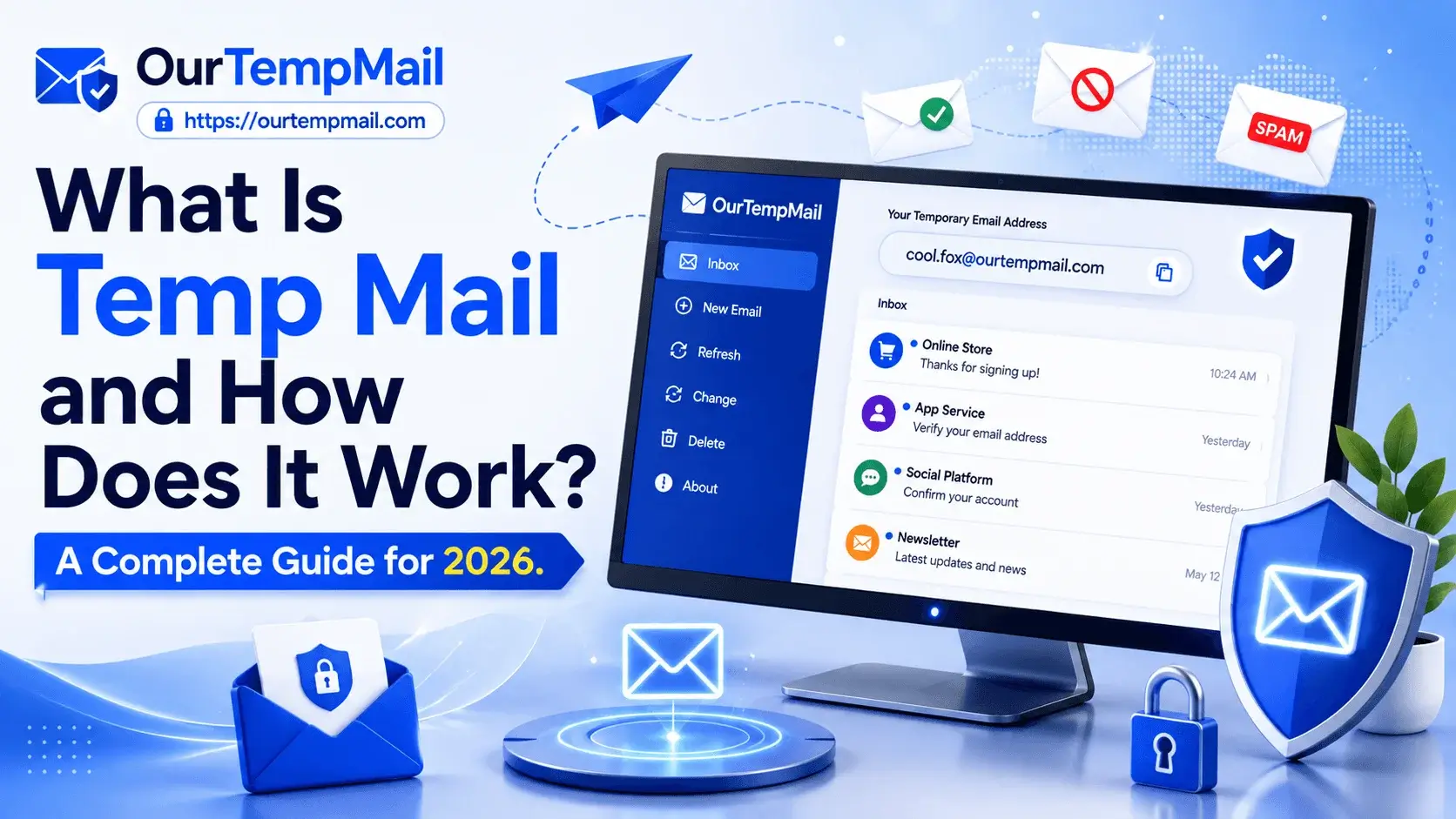
The mechanics behind temp mail are simpler than most people expect. When you visit a temporary email service like Our Temp Mail, the website generates a unique email address for you automatically. This address is connected to a temporary inbox that lives on the service's servers for a set period of time.
You copy that address, paste it into whatever form or sign-up page you are dealing with, and any email sent to that address lands in your temporary inbox in real time. You can see the message, copy a verification code, click a confirmation link, or do whatever you came to do. Once your session ends or the inbox expires, everything is deleted. The address stops working and the messages are gone permanently.
What Happens Behind the Scenes
When a website sends a verification email to your temp mail address, it travels through the same email infrastructure that carries every other email on the internet. The temporary email service receives it on its servers and displays it in your session inbox. From the sending website's perspective, it behaved exactly like a real email address. The difference only becomes clear later when the address expires and stops accepting messages.
Does Temp Mail Work for All Websites?
Most websites accept temporary email addresses without any issue because they look and function exactly like regular email addresses. Some platforms have started blocking known disposable email domains to prevent people from creating multiple accounts or bypassing paywalls. When this happens, a good temp mail service will offer multiple domain options so you can switch to one that the website does not have on its block list.
Who Uses Temp Mail and Why
Temp mail is not just for people who are trying to hide something. The vast majority of people who use disposable email addresses have straightforward, everyday reasons for doing so.
Everyday Internet Users
The most common use case is simple spam avoidance. Someone wants to download a free guide, access a free tool, or read an article behind a registration wall. They use a temp mail address to get through, grab what they need, and avoid adding another website to the list of places that have their real contact information.
Developers and Software Testers
Building an app that sends verification emails requires testing that flow repeatedly. Developers use temp mail services to generate multiple test email addresses quickly without creating real accounts or cluttering up an actual inbox. It is faster, cleaner, and keeps testing environments separate from real-world data.
Students and Researchers
Students often need access to academic tools, research platforms, and educational resources that require registration. Many of these platforms send ongoing marketing emails or notifications that pile up over time. A temp mail address gets them the access they need without the long-term inbox noise.
Privacy-Conscious Users
Some people simply make a habit of using temp mail for any website they are not fully familiar with. It is a practical way to limit how widely their personal contact information is distributed across the internet, and it reduces the risk of their real email showing up in a data breach from a site they only visited once.
The Real Benefits of Using Temp Mail in 2026
Temporary email has become more relevant in 2026 than it has ever been before. Privacy regulations have increased awareness around how personal data is handled, but the volume of online services asking for your email address has only grown. The benefits of using temp mail regularly are more practical today than they were even a couple of years ago.
Your inbox stays cleaner when you stop feeding your real address into every website that asks for it. Your risk of being affected by a data breach drops because fewer places hold your contact information. Your online experience feels less cluttered because you are not chasing unsubscribe links or managing filters to keep promotional emails out of your main view.
Temp mail does not require any technical knowledge, any extra software, or any ongoing maintenance. It is one of the few tools that genuinely makes your online life simpler just by existing.
What You Should Not Use Temp Mail For
Temp mail is useful in a lot of situations but it is absolutely the wrong choice for others. Using a disposable address for anything important or long-term will cause problems down the road.
Do not use temp mail for your bank account, investment platform, or any financial service. If you lose access to the email address tied to your account and need to recover it, a temp mail address will not help you. Do not use it for government services, healthcare platforms, or legal accounts for the same reason. Do not use it for any account that you plan to keep or return to in the future, because the address will eventually expire and you will have no way to receive password resets or important notifications.
Think of temp mail as a tool for situations where the relationship with a website is truly one-time or short-term. For everything else, use a real email address that you fully own and control.
How to Start Using Temp Mail Right Now
Getting started with a temp mail service takes no more than a few seconds. Visit Our Temp Mail at ourtempmail.com and a free disposable email address is already waiting for you on the page. There is nothing to install, nothing to register, and nothing to pay. Copy the address, head to whatever website you need it for, paste it in, and check your Our Temp Mail inbox for the confirmation or verification email.
That is genuinely all there is to it. Most people who try temp mail for the first time are surprised by how straightforward the experience is compared to what they expected.
Final Thoughts
Temp mail is not a complicated tool and it is not just for people with something to hide. It is a practical, everyday solution to a problem that almost everyone with an email address experiences at some point. Giving out your real contact information to every website that asks for it is a habit that costs you inbox space, privacy, and peace of mind over time.
Using a temporary email address when the situation calls for it is just a smarter way to interact with the internet. It takes seconds, costs nothing, and keeps your real inbox exactly where it belongs, in your control.
Tags:
#What is temp mail
#anonymous email
#temp mail
#temporary email
#disposable email
#free temp mail
#Our Temp Mail