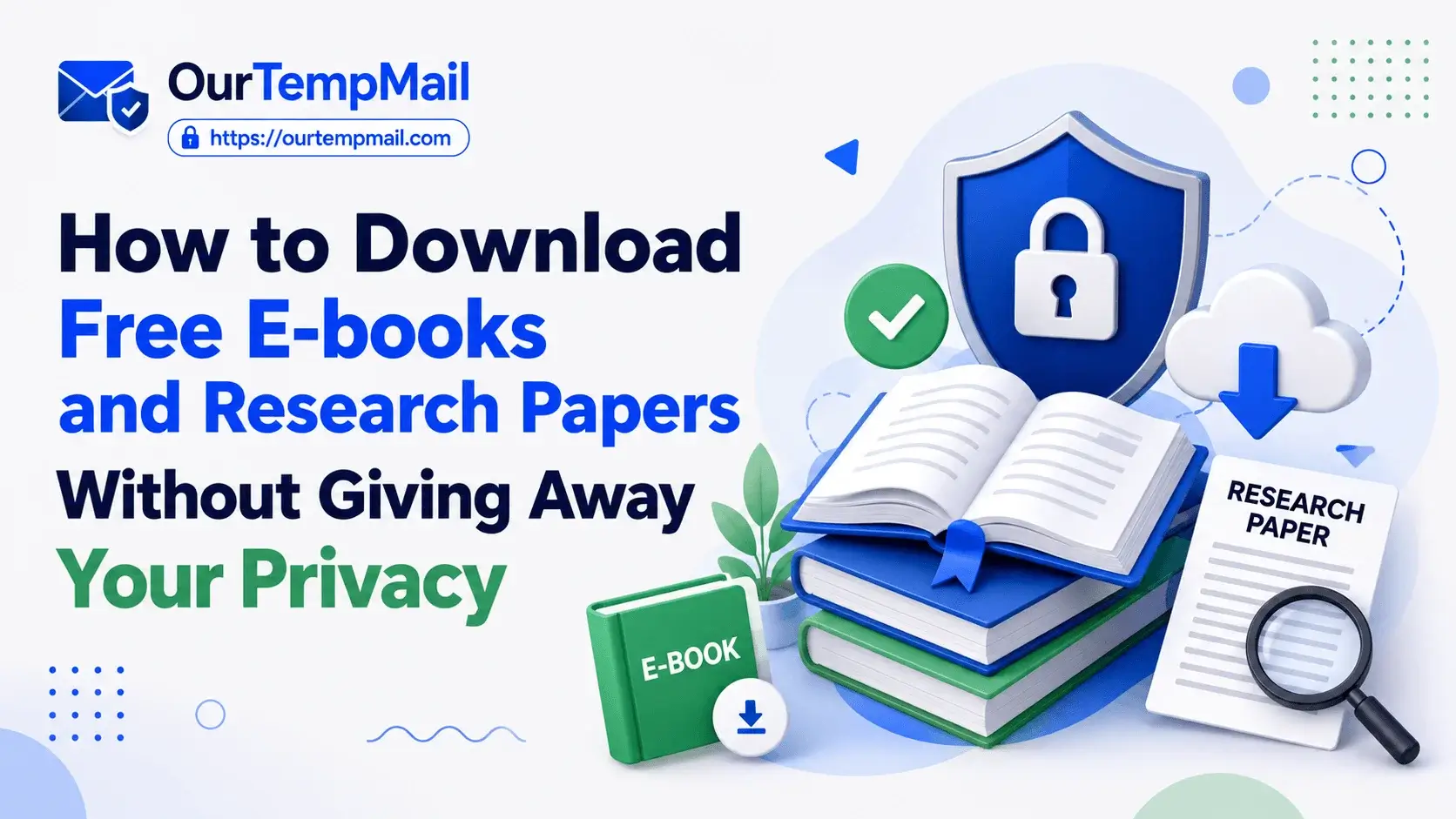
How to Download Free E-books & Research Papers Without Giving Away Your Privacy
You found the perfect e-book. Maybe it is a guide on digital marketing, a self-help book you have been meaning to read, or a research paper your professor mentioned in class. You click the download button and then it appears a little form asking for your name and email address before you can get anything.
You give it, get the file, and think nothing of it. A week later your inbox is full of newsletters from a website you barely remember visiting. That is gated content doing what it was designed to do and it is happening to millions of people every single day.
The good news is there is a smarter way to handle this. You do not have to choose between protecting your privacy and getting the content you actually need. This guide explains how gated content works, why websites collect your email in the first place, and how a simple disposable email address gives you access to everything without handing over anything personal.
What Is Gated Content and Why Does It Exist?
Gated content is any piece of online material that sits behind a form or registration wall. You cannot access it until you provide some kind of contact information, usually your email address. E-books, research papers, PDF guides, online courses, whitepapers, and downloadable templates are all common examples of gated content.
Websites use this model because your email address is valuable to them. Once they have it, they can add you to a mailing list, send you product promotions, follow up with offers, and track your behavior across their platform. The free e-book is essentially a trade. You give your contact details, they give you a PDF. Most people do not realize the long-term cost of that trade until their inbox becomes unmanageable.
Academic platforms and research paper sites work similarly. Many require you to create an account or verify an email before allowing access to papers, journals, or study materials. The content may genuinely be free but the price of entry is still your personal information.
The Problem With Using Your Real Email for Every Download
Most people have a single personal email address they use for everything. Work communication, social media, banking, and now every e-book download and research paper request they have ever made. Over time that inbox becomes a mix of things that actually matter and a flood of content from dozens of platforms they signed up to once and forgot about completely.
The bigger issue is what happens to your email address behind the scenes. Some platforms sell their mailing lists to third-party advertisers. Others get involved in data breaches that expose subscriber information. A handful of services make unsubscribing genuinely difficult, burying the option or re-adding you after you opt out. Every time you enter your real email on an unfamiliar platform, you are taking a risk you probably did not sign up for.
And here is the thing none of this is necessary. There is a way to download free e-books, access research papers, and get through gated content without touching your real inbox at all.
How a Disposable Email Address Solves This Problem
A disposable email address is a temporary, anonymous inbox that works exactly like a real email address for receiving messages. It accepts verification emails, download links, and confirmation codes just like any other inbox would. The difference is that it is not connected to your identity in any way and it disappears once you are done with it.
When you use a disposable email on a gated content site, the platform sends the download link or access confirmation to that temporary inbox. You open it, grab the file or link, and move on. The platform has no way to follow up with you because the address stops accepting messages once the session ends. No newsletters, no follow-up campaigns, no promotional emails. Just the content you came for.
Think of it as a burner email for free trials and downloads. You use it once for a specific purpose and then it is gone. Your real inbox stays untouched, your personal information stays private, and you walk away with exactly what you needed.
Step by Step : How to Download Free Content Without Using Your Real Email
Step 1 : Open Our Temp Mail
Visit ourtempmail.com and a free disposable email address is automatically generated for you the moment the page loads. No sign-up, no personal details, nothing required. Your temporary inbox is ready before you even scroll down the page.
Step 2 : Copy Your Temporary Email Address
Copy the temp mail address shown on the screen. It looks and works exactly like a real email address. Any platform you use it on will treat it as a valid inbox because it genuinely is one just a temporary one.
Step 3 : Paste It Into the Download or Sign Up Form
Head to the e-book site, research platform, or any gated content page you need access to. Paste your disposable email address into the required email field and complete the form as normal. Submit and wait for the confirmation or download link to arrive.
Step 4 : Check Your Temporary Inbox and Grab the Content
Switch back to your Our Temp Mail tab. The confirmation email or download link will appear in your temporary inbox within seconds. Click the link, download the file, and you are done. The platform has no way to follow up with you and your real inbox remains completely untouched.
Popular Platforms Where This Approach Works
A disposable email works on the vast majority of platforms that ask for an email address before delivering free content. Here are some of the most common examples where students, researchers, and everyday readers use a fake email generator to protect their privacy.
E-book Download Sites
Platforms that offer free e-books on business, self-development, technology, and other topics almost always require an email before delivering the download. A disposable email gets you through the gate instantly without putting your real address on their mailing list.
Academic and Research Paper Platforms
Sites like Academia.edu, ResearchGate, and similar academic platforms often ask you to create a free account or verify an email to view or download papers. Using a temp mail address for these sign-ups means you get access to the research you need without building up a trail of academic marketing emails in your personal inbox.
Online Course Previews and Learning Platforms
Many online education platforms offer free course previews, sample lessons, or downloadable study guides behind an email wall. A throwaway email lets you explore the content without committing your real address to a platform you are still evaluating.
Software Whitepapers and Industry Reports
Technology companies and industry research firms regularly publish free whitepapers, annual reports, and trend guides. These are valuable reads but they almost always require an email address that then gets used for sales follow-ups. A burner email for free trials and reports like these is one of the most practical uses of temp mail available.
Who Benefits Most From This Approach?
Students and Researchers
Students dealing with assignments, thesis work, or general research regularly need to access papers, journals, and academic guides across multiple platforms. Giving a university email to every platform that asks creates a cluttered inbox that becomes harder to manage over time. Temp mail keeps the student's actual inbox clean and focused on what matters.
Professionals and Freelancers
A freelance designer, developer, or marketer who regularly downloads industry resources and guides can end up with dozens of platform newsletters fighting for space in their work inbox. Using a disposable email for these downloads separates professional communication from content gathering and keeps things organized.
Everyday Readers and Learners
You do not need a specific professional reason to want privacy. Anyone who enjoys reading, learning, and exploring different topics online will eventually run into gated content. Using a temp mail address in these moments is simply a cleaner, smarter habit that keeps your inbox free from noise you never asked for.
Is Using a Disposable Email for This Purpose Safe and Ethical?
This is a question worth addressing directly. Using a temp mail address or a fake email generator to access free content is not the same as pirating, hacking, or doing anything that harms a platform. The content is free. The platform is offering it in exchange for contact information. You are simply choosing to provide a temporary contact point rather than a permanent one.
The ethical line is around the intent. If a platform offers genuinely free content and the only thing standing between you and it is an email form, using a disposable address to protect your privacy is a reasonable choice. Where it becomes problematic is if you are using it to exploit a paid service, bypass a paywall for content that is not free, or repeatedly abuse a platform's trial system.
For accessing legitimately free e-books, research papers, and downloadable guides, a disposable email is a completely reasonable privacy tool. It protects you without taking anything from the platform that was not already being offered for free.
A Few Things to Keep in Mind
Temp mail is excellent for one-time downloads and short-term access but it is not the right tool for every situation. If a platform requires ongoing access, regular logins, or long-term account use, a temporary email address will cause problems down the road when the inbox expires and you need a password reset or an important notification.
Always download your file or copy your link before closing the temp mail tab. Once the session ends, the inbox and everything in it is permanently deleted. There is no recovery option.
Some platforms detect and block disposable email domains. If that happens, Our Temp Mail offers multiple domain options so you can switch to one that works. Most platforms will accept at least one of the available choices.
Final Thoughts
Free content should actually be free including free from the cost of a cluttered inbox and an email address scattered across platforms you visited once. Gated content exists because your contact information has value, but that does not mean you are obligated to hand it over every single time.
A disposable email address from Our Temp Mail gives you a clean, simple way to access the e-books, research papers, and downloadable guides you genuinely need without giving away the one thing every website on the internet wants from you. It takes five seconds, costs nothing, and keeps your real inbox exactly where it belongs yours.
Tags:
#free ebooks download
#download free ebooks without email
#protect email privacy
#anonymous email address
#fake email generator
#download ebooks without email signup
#free research papers without sign up